Why CreatorsForge exists.

We built this because the problem is real, the gap in the market is real, and we had a method that worked.

Built by someone who makes things.

We built an engine for helping creators get products built and into the market. That sounds simple. Getting there wasn't.

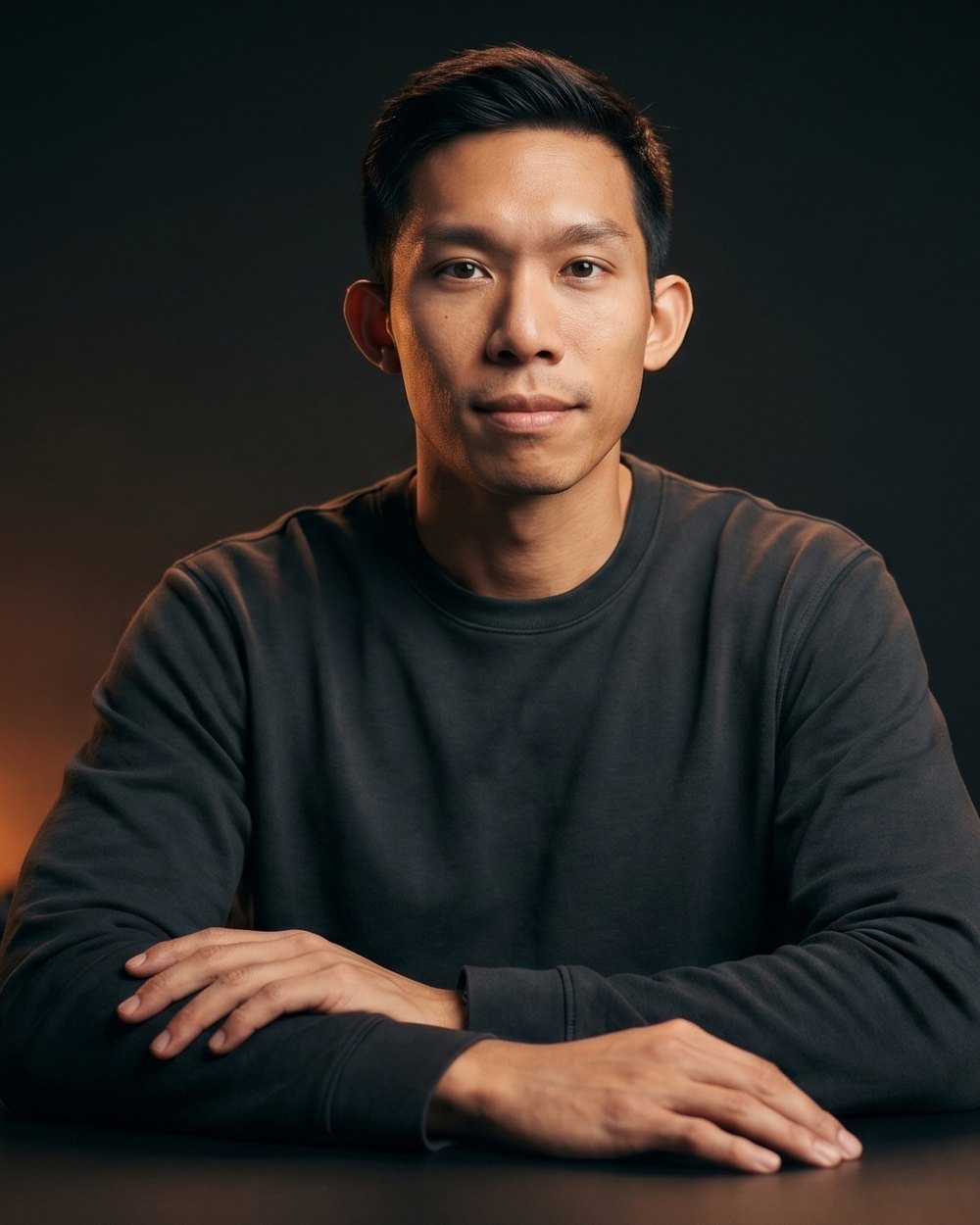
I'm Duy, the founder of CreatorsForge. I've spent over a decade building training systems at a major engineering software company: curriculum design, learning architecture, the problem of taking complex technical knowledge and making it usable by someone who encounters it for the first time. That's the job I've had since I was 25. It's also, it turns out, the exact job that a creator's digital product needs done.

The creator has the knowledge. The knowledge is real. The audience trusts it. What's missing is the system: extract the voice, validate the niche, build the product, get it in front of the audience. When I looked at what AI could do inside that system, I saw that the bottleneck wasn't the building anymore. It was the method.

So we built the method into the engine.

A production system built on a method we paid to learn, tested on our own products before we ran it for anyone else.

CreatorsForge is not a ghostwriting service. It's not a content agency. It's a production system: built on a method we paid to learn, tested on our own products before we ran it for anyone else, and designed so the creator's job stays exactly where it should be: in front of their audience.
The method has lineage.

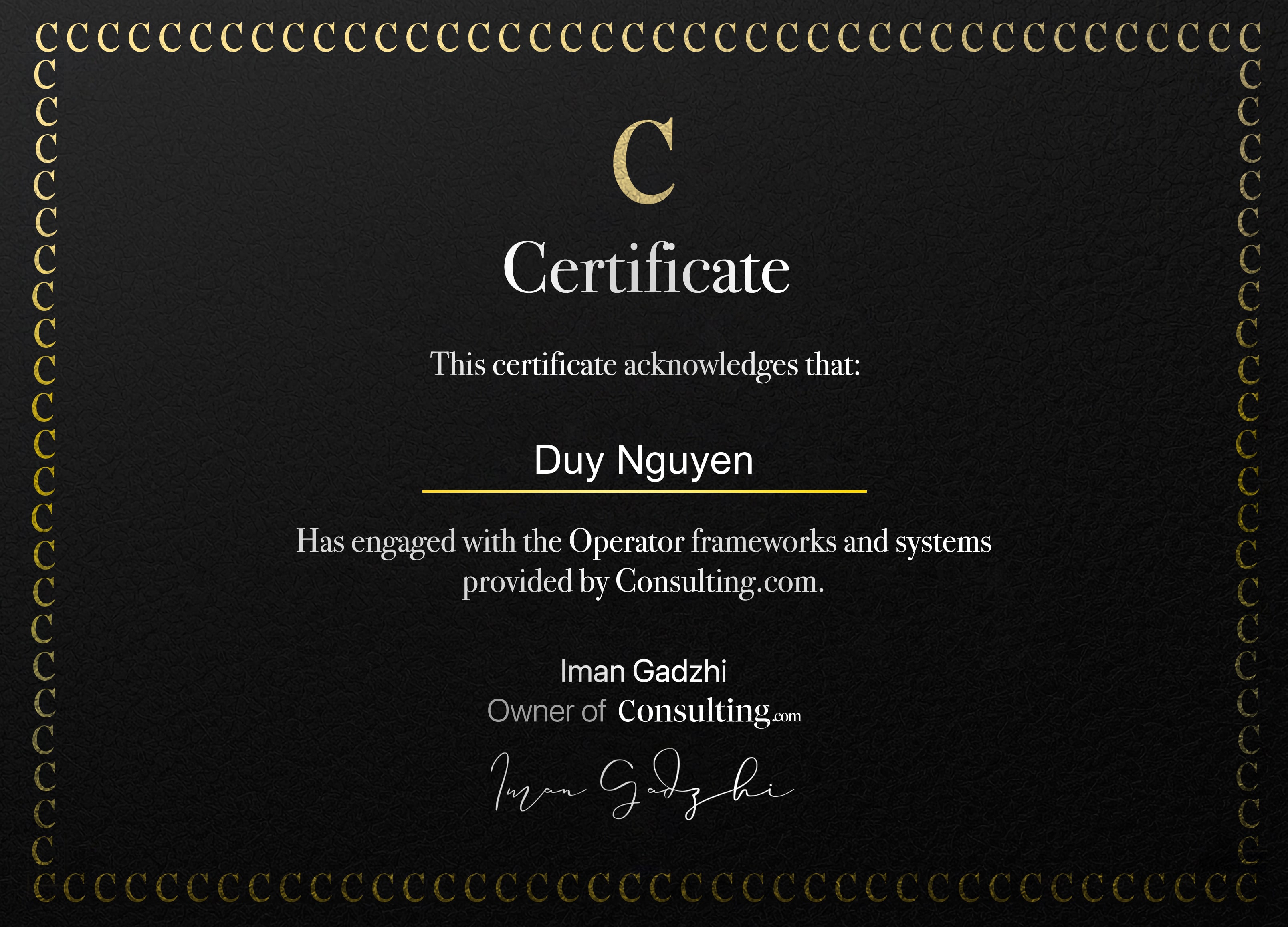
CreatorsForge is built on the Shadow Operator Playbook, developed by Iman Gadzhi through Consulting.com. We don't call it a certification. We call it what it is: a method we paid to learn and ran until the output was reliable.

The Playbook has seven chapters. Every stage of the CreatorsForge pipeline traces back to one of them.

01

Fundamentals

CF: ICP definition

Who the creator-operator serves, how the service is positioned. CreatorsForge's ICP work (10k-250k followers, engaged niche audience, no product yet) comes directly from this chapter's filter.

02

Mindset

CF: Engine model

The operator thinks in systems, not tasks. The 3/month capacity cap is an operational decision, not a scarcity device.

03

Systems and Processes

CF: Three-pillar structure

Voice extraction, niche validation, product writing, listing operations, launch kit. Repeatable output, every time.

04

Finding Creators

CF: Partner acquisition

The invited-partner lane traces directly to this chapter's distinction between inbound and outbound acquisition.

05

Finalising Partnerships

CF: 70/30 Whop split

Alignment principle applied to digital product checkout. Automatic. Clean. No invoices between us.

06

Building Offers and Contracts

CF: Validation refund

The math-first principle applied to the earliest decision point. If the niche doesn't score, the fee comes back.

07

Product Launch

CF: Launch kit

14-day story sequence, sales page, email sequence. All written in the creator's voice from their Creator DNA profile.

The certificate is real. Click it.

Consulting.com Operator frameworks certificate

Consulting.com Operator frameworks certificate. Trained in the Shadow Operator Playbook by Iman Gadzhi.

Where AI fits.

AI does the heavy lifting. The math gates the quality. A human approves every word. It sounds like you because it's built from your voice.

That's the formula. Here's what it means in practice.

AI handles the research pass: competitor scanning, price ladder building, source gathering for the fact-check. It handles the first-draft production: taking the Creator DNA profile and producing a structured draft that carries the creator's vocabulary and content pillars.

The math gates the quality at two points. Before we write, the 40-point niche score decides whether we build at all. During writing, the HIGH/MED/LOW fact-check labels decide whether each claim survives the draft or gets revised.

A human runs every stage: reading the niche score, reviewing the competitor scan, approving the DNA profile, editing the draft, reviewing the fact-check pass, and signing off before anything goes to the creator.

The creator reads and approves the final draft before it ships. That's the last gate.

The result sounds like the creator because it was built from their material, filtered through their voice, checked for accuracy, and reviewed by a person who knows what "right" looks like. It doesn't sound like AI because generic AI doesn't know your audience, your language, or the specific question your followers keep asking you. Ours does.

We run it on ourselves.

Before we ran this engine for anyone else, we ran it on our own products. The Fuel Lab is our own digital product brand. It ships real products under our own brand, built on the same production system we use for partners: same voice extraction, same niche validation, same fact-check gates.

It's not a demo. It's the system running in production.

We run it for partners too. In the fitness niche, that meant ebooks researched, written in the creator's voice, fact-checked, designed, and launched on Whop. The 70/30 split runs automatically at checkout. The creator reviews and approves every word before it ships. No invoices. No chasing. The money splits itself.

Everything on this page is inspectable: the method has lineage, the engine runs in production, and partner products are live right now. We cap at three partnerships a month by design. The track record builds one product at a time.